
AI Marketing Agents Enter Commerce as Trust and Pricing Concerns Grow
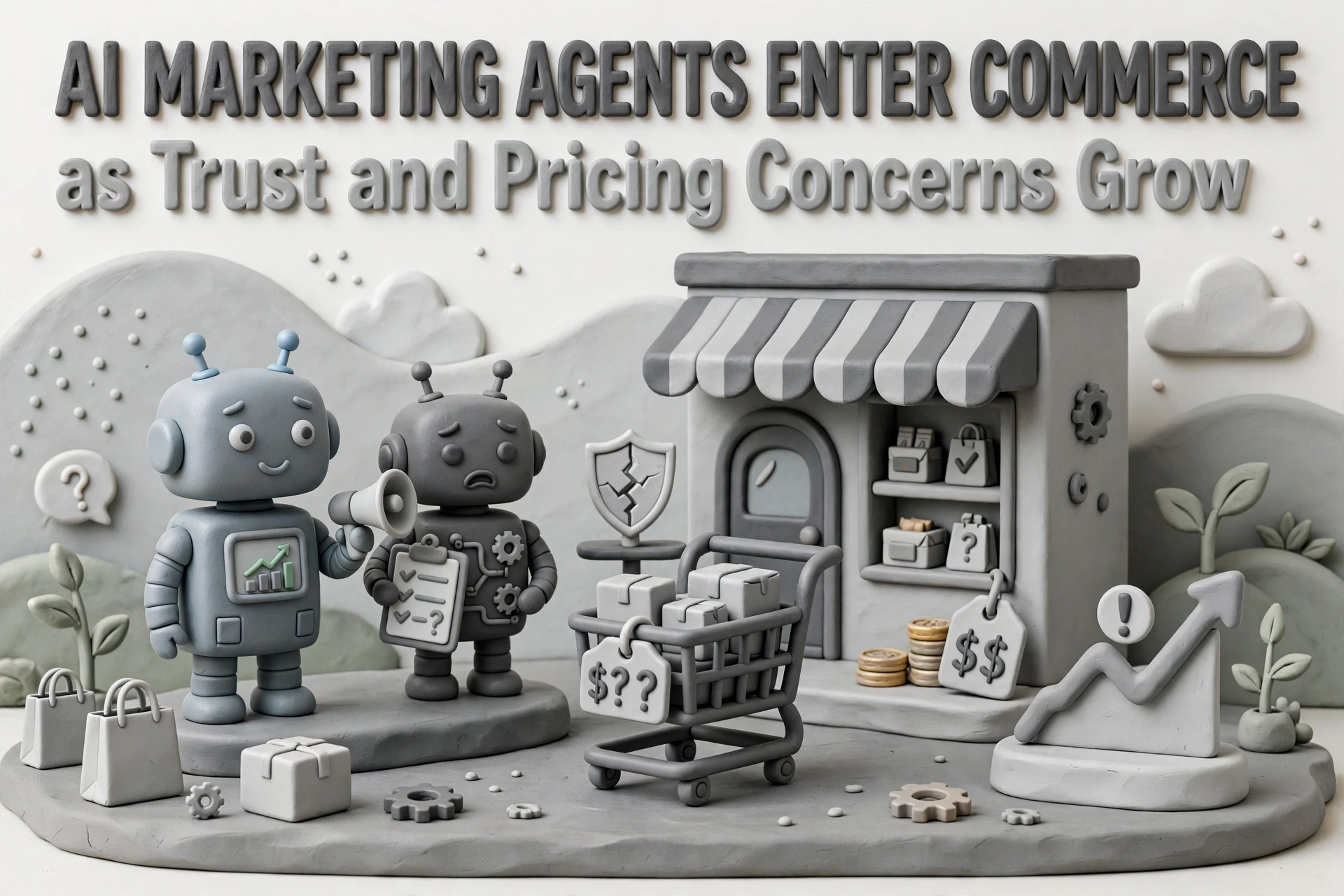
Quick Summary: AI marketing agents are shifting from recommending products to actually completing purchases, but trust remains the main barrier: a 2026 Checkout.com survey found 24% of consumers will never let an AI buy for them and 27% trust no company to run a shopping agent. The article says small businesses should focus on clean, machine-readable product data, clear pricing, and visible reviews, since agents reward those signals over page design or loyalty. Harrigan Creative advises clients to fix both discovery and purchasing steps, and to run small, measurable AI pilots before spending big.
In January 2026, Gartner predicted that 60% of brands would use agentic AI for one-to-one interactions by 2028. Yet commerce research flags trust, security, and payment concerns as real barriers to letting AI agents complete purchases. So AI marketing agents can find and compare your business today, but whether customers let them buy is still an open question. This article examines that gap, and what it means for merchants protecting margins and consent while preparing their digital presence.
AI Agents Are Moving From Personalization Toward Commerce
Discovery and purchasing are different steps
For years, AI marketing agents handled personalization: they recommended products, sorted email lists, and tuned ads. That work stopped short of money changing hands.
Agentic commerce is different. Here, agents don't just suggest options. They research, compare prices, and complete purchases on a customer's behalf, often with no human at checkout. IBM notes that 45% of consumers already use AI for part of the buying journey, and analysts project agents could mediate trillions in spending by 2030.
The split matters for small businesses. Discovery still rewards good content and local SEO. Purchasing rewards clean product data and machine-readable offers. A site that explains your services well but hides pricing or specs may get found, then skipped.

That's why firms like Harrigan Creative tell clients to fix both steps, not just the first one.
Trust Is the Gate Between Recommendations and Purchases
AI can recommend a product in seconds. Buying it is another story. In a 2026 Checkout.com survey, 24% of consumers said they will never let an AI buy for them, and 27% trust no company to run a shopping agent at all. The machines are ready. The people are not.
Permission, identity, and accountability remain open questions
Three problems still block the handoff from recommendation to checkout:
- Permission. How much can an agent spend? Shoppers want spending caps (30%), instant revocation (29%), and easy cancellation (28%) before they hand over a wallet.
- Identity. Merchants need to tell a real customer's agent apart from a bot. Payment firms are testing fixes like Visa's Trusted Agent Protocol, launched after AI traffic to retail sites jumped 4,700% in a year.
- Accountability. If an agent buys the wrong thing, who refunds it? Standards are still forming.

For small businesses, the fix is practical: clear pricing, visible reviews, and human backup when an order goes wrong. That is the groundwork we cover in local SEO and paid media strategies at Harrigan Creative, because trust signals are what agents - and shoppers - reward.
Agent-Led Buying Could Change the Economics of a Sale
When an AI agent completes checkout, the sale looks nothing like it does today. There is no browsing, no ad click, no abandoned cart. The customer states a goal, and the agent compares options and buys.
That shift changes where the money goes. OpenAI's Instant Checkout charges merchants a 4% fee, and Stripe says agents could account for most online transactions soon. McKinsey projects $3 to $5 trillion in agentic sales by 2030.
But agents compress the funnel. Price, structured data, and reviews matter more than page design or loyalty. If your product can't be read by an agent, it may never be found.
[Table or summary table may follow per outline]
Small businesses should treat agent readability as a new form of visibility, on par with local SEO.
Planning for this shift now beats reacting later. Track which channels actually drive revenue as agent traffic grows, using metrics like the ones in our guide to measuring real marketing ROI.
What Businesses Should Prepare for Now
Start with accurate information and bounded tests
Agentic commerce rewards businesses with clean, current details. Check your hours, prices, and service descriptions everywhere they appear online, since AI agents quote what they find. Then run small, measurable pilots before spending big. Test one AI tool for answering customer questions or tracking leads, and watch the numbers closely. Our guide to marketing metrics that show real growth explains which numbers matter most.
AI marketing agents raise real trust and pricing questions. Harrigan Creative helps you adopt what works, skip what doesn't. Book a free strategy call today.
Frequently Asked Questions
Q1: What do new AI marketing agents mean for commerce?
They let software research, compare, and buy on a customer's behalf. Small businesses must keep listings accurate, prices clear, and trust signals strong.
Q2: Are AI agents safe to use?
Cautiously. Watch costs, review outputs, and keep a human checking key decisions.
Q3: Should my business adopt them now?
Test one simple task first, like review responses, before wider use.
Conclusion
AI marketing agents are moving into commerce fast, but trust and pricing gaps remain. Small businesses that test carefully, watch costs, and track real results will gain the most. Measure what matters with our marketing metrics guide.