
Custom Website Design for International Brands: Key Planning Factors
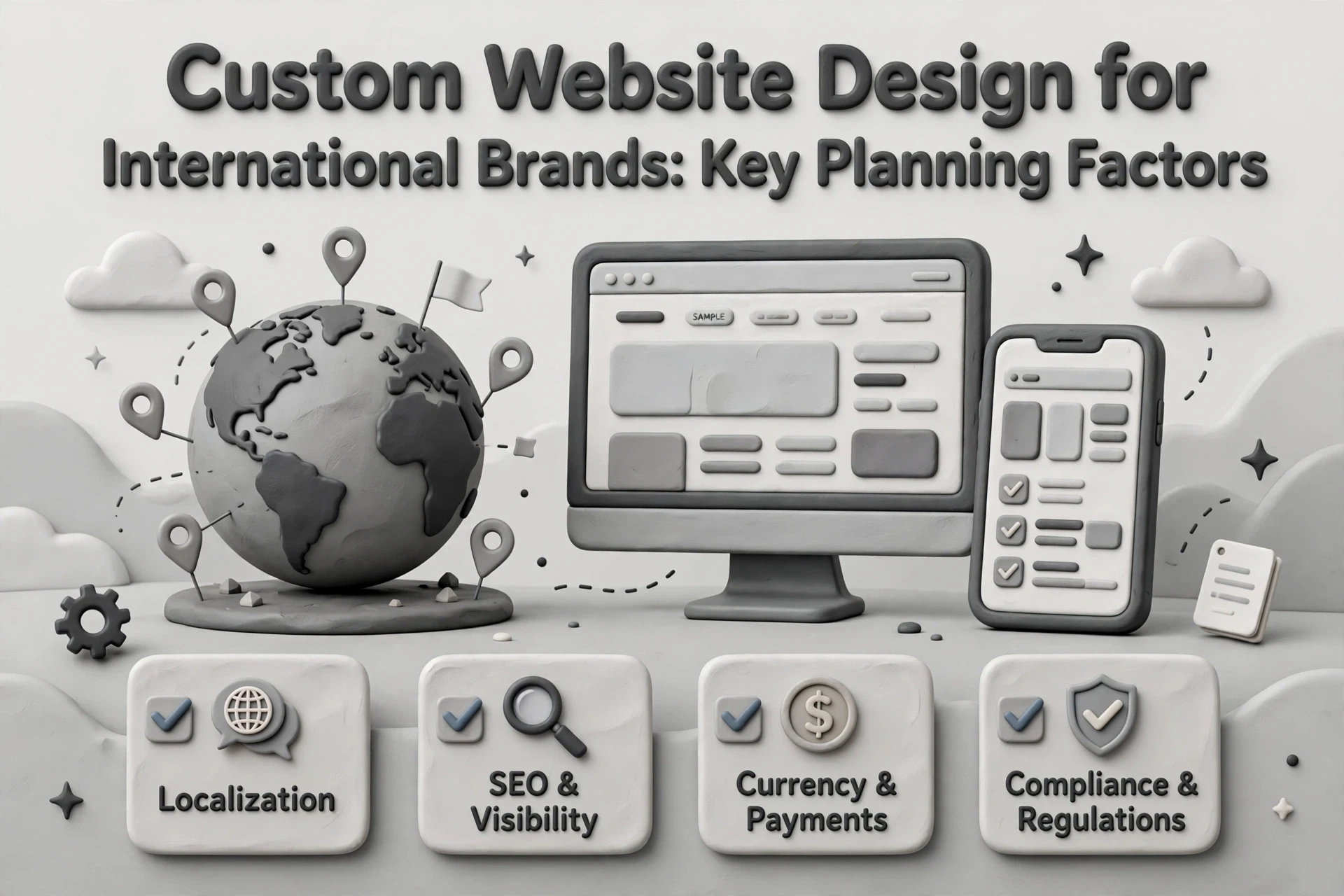
Quick Summary: International websites fail when brands skip planning, so prioritize markets before features, localize language and locale details, and build international SEO into the structure from the start. Use subdirectories with hreflang tags for most brands, and plan governance, GDPR compliance, and regular updates after launch. The article, from Harrigan Creative, emphasizes that accessibility and native translations must be part of the design phase, not retrofitted later.
A visitor in Germany might land on English text but find US pricing, a phone number they can't call, and a form that routes to the wrong office. Good international custom website design catches those gaps early - market choice, localized UX, SEO, and who owns updates. This guide covers the planning factors that matter, drawn from our work building sites for growing brands across borders.
Set Market Priorities Before Choosing Features
Every market you enter should earn its place. With more than 250 countries and territories to choose from, the practical approach is to narrow the list to a few priority markets first, as the Ohio SBDC market prioritization method recommends. Features come later. If you build a checkout, a booking flow, or a portal before you know which markets matter, you build for the wrong people.
Define What Success Means in Each Market
Name the goal before the design. Ask for each market:
- What is the main outcome? More leads, more sales, or phone calls?
- What number proves it? Set a target, like 20 qualified leads per month.
- What must the site do to get there? This list becomes your feature list.
Success in Germany might mean trust signals and legal pages. In Mexico, it might mean a fast mobile experience. Frameworks like CAGE analysis help you judge how far each market sits from your home base, so expectations stay realistic.
Also Read: 7 Conversion-Focused Website Features Service Businesses Need
Design a Consistent Brand Experience That Feels Local
Plan for Language, Locale, and Accessibility
A strong brand look stays the same worldwide, but small details must change by market. In international custom website design, plan three things together: language, locale, and accessibility.
For language, use native speakers for translation and mark each page's language in the code. For locale, adjust dates, currency, phone formats, and color meaning per market - red signals danger in the US but luck in China.
For accessibility, build to WCAG 2.2, the W3C standard used by governments worldwide. Cover the basics:
- Add alt text to images and captions to video
- Keep strong color contrast
- Make every feature keyboard-friendly
- Use clear, visible form labels

Harrigan Creative builds these checks into the design phase, not after launch. Fixing accessibility early costs far less than retrofitting it later.
Also Read: Custom Development vs CMS Development: What to Choose
Choose a Scalable Technical and Search Foundation
Make International SEO Part of the Design Brief
International custom website design fails most often at the structure stage, not the visual stage. Your platform choice should let you add languages and markets later without rebuilding the site. That means planning URL architecture before design starts.
Google recommends a separate URL for each language version, connected with hreflang tags so searchers land on the right version. The three main options trade off cost, control, and authority:
| Structure | Example | Best For |
|---|---|---|
| Subdirectory | example.com/de/ | Most brands; shares domain authority, low upkeep |
| Subdomain | de.example.com | Separation by region or unit |
| Country domain | example.de | Strong country signal, higher cost |

Subdirectories are usually the smartest starting point. They're easy to set up and keep per Google's structure guidance.
Two habits prevent the most hreflang damage:
- Tag every page version in both directions - if pages don't point back to each other, Google may ignore the tags.
- Avoid auto-redirects based on browser language. Let users pick.
Build these rules into the design brief, and your international custom website design scales cleanly into new markets.
Plan Governance, Compliance, and Continuous Improvement
A launch date is a starting point, not a finish line. Assign clear ownership: decide who updates content, monitors performance, and approves changes in each market.
Compliance matters from day one. If your site serves EU visitors, GDPR rules apply even to non-EU companies - you will need clear consent, a current privacy policy, and a process for data requests. Data moving across borders needs lawful transfer safeguards.
Then improve on a rhythm: review analytics monthly, refresh localized content quarterly, and revisit priorities annually. Small, steady updates beat one big redesign every three years.
Ready to build a website that wins in every market you serve? Harrigan Creative plans, designs, and launches custom sites with local SEO and paid media built in. You keep every asset. Book your free strategy call today.
Frequently Asked Questions
Q1: How should global brands plan custom website design?
Start with market priorities. Pick your top two or three regions, map local search and payment habits, then build localized pages and structure before design work begins. Plan hosting, speed, and ownership up front.
Q2: Should each country have its own website or one global site?
One site with separate language and country URLs usually works best. It's cheaper to maintain, easier to track, and lets search engines show the right page to the right market.
Q3: How much does a custom international website cost?
Most small and mid-sized brands spend $10,000 to $50,000, depending on languages, features, and integrations. Get a scoped quote so you know what each extra market or language adds.
Conclusion
Custom international websites succeed when planning comes first: pick markets carefully, localize instead of translating, build solid international SEO, and treat accessibility as a requirement. Teams that follow a clear checklist and build accessibility in early turn one site into growth in every market they serve.