
How to Estimate Web Development Pricing for a Business Website
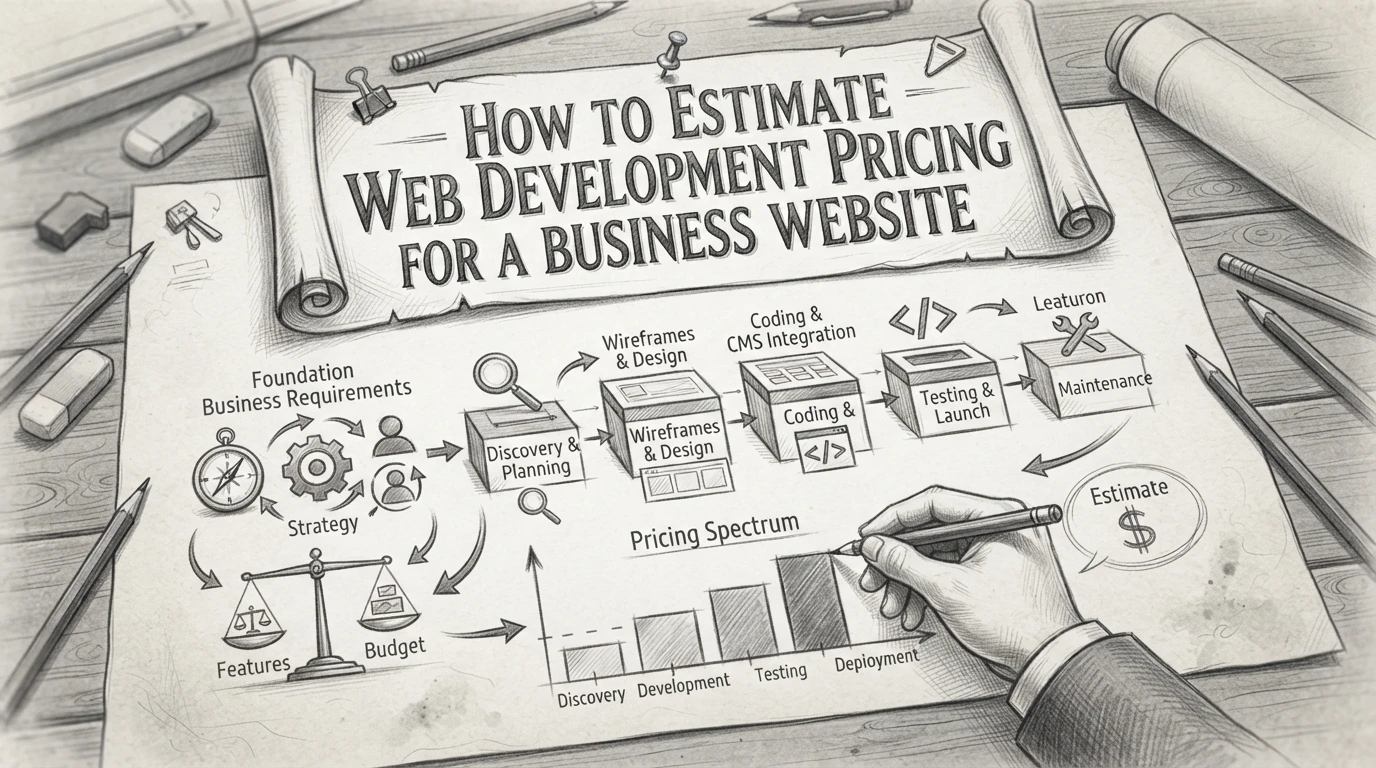
Quick Summary: Web development pricing for a small business site in 2026 splits into three tiers: $200-$1,500 for DIY builds, $2,000-$10,000 for template-plus-freelancer work, and $10,000-$50,000+ for custom design, which explains why two quotes for the same six-page site can land at $4,000 and $18,000. The smartest move is to count pages, flag complexity-heavy ones (bookings, payments, maps), and ask vendors which hidden line items - copywriting, photos, forms, revision rounds - are bundled in. Lock a written scope covering pages, who supplies content, revision count, timeline, and change-order rates, then budget another $20 to $150 monthly for hosting, domains, SSL, and upkeep after launch. Harrigan Creative uses transparent, line-item pricing on these builds, so a clear scope up front is what keeps their custom projects from drifting into surprise invoices.
Two quotes land on your desk for the same six-page website: $4,000 from one shop, $18,000 from another. Neither says where the gap went. Web development pricing feels random because most owners have no way to break a quote into parts. This guide shows you how, using a bottom-up method, 2026 price ranges, and the ongoing costs most quotes skip. Harrigan Creative has built sites for local service businesses for years, so these numbers come from real projects.
Step 1: Set the Real Cost Range for Your Website
Before you talk to anyone, set a range. Web development pricing in 2026 falls into three broad tiers, and knowing which tier you belong in kills most quote confusion.
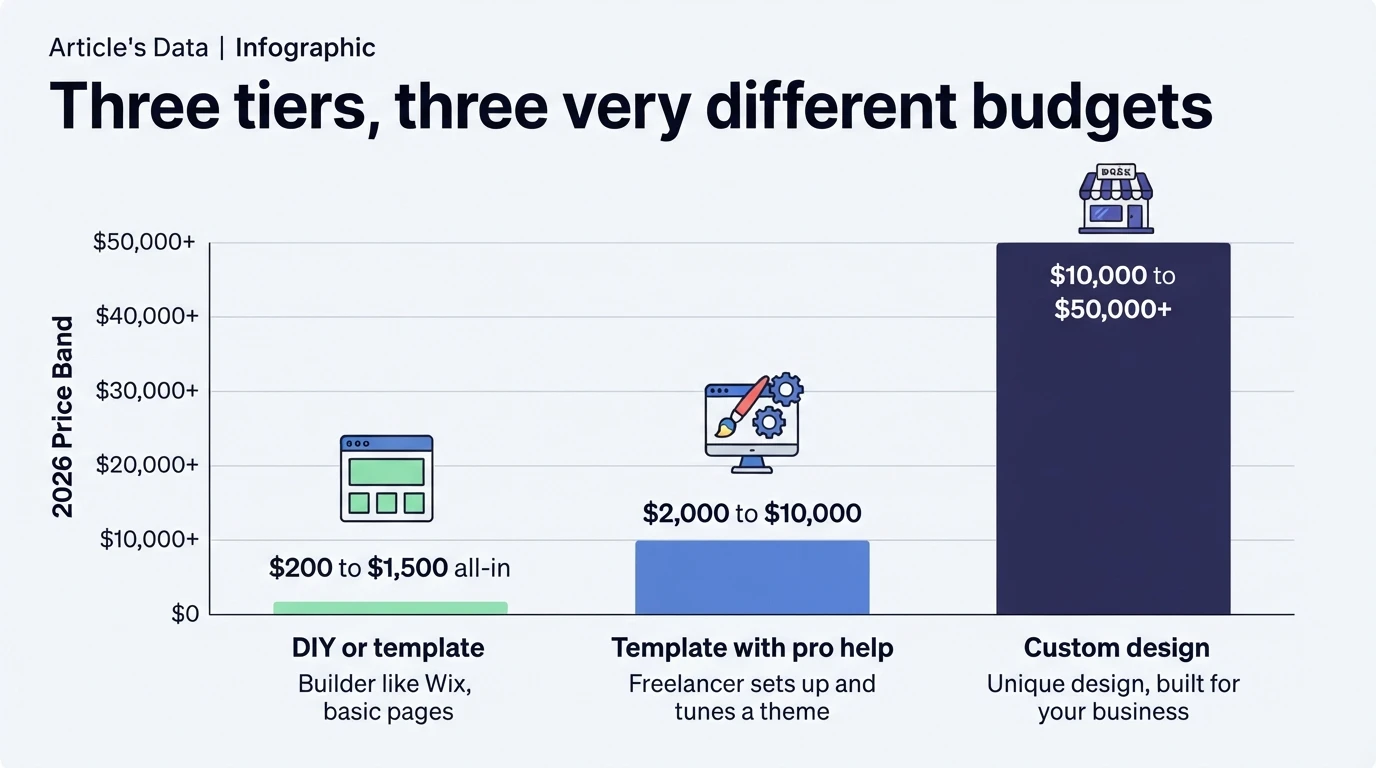
Three tiers, three very different budgets
| Tier | What You Get | 2026 Price Band |
|---|---|---|
| DIY or template | Builder like Wix, basic pages | $200 to $1,500 all-in |
| Template with pro help | Freelancer sets up and tunes a theme | $2,000 to $10,000 |
| Custom design | Unique design, built for your business | $10,000 to $50,000+ |
Industry guides put a custom small business site between $10,000 and $50,000, while template-plus-freelancer builds land around $2,000 to $10,000, so Forbes' 2026 cost breakdown is a fair benchmark. Your six-page site sits in tier two or three, which explains the $4,000 and $18,000 gap.
Where the money actually goes
Most of your budget buys hours, not software. Design work, copywriting, mobile-friendly coding, and revisions typically eat 70 to 80 percent of a custom project. Hosting, domains, and maintenance are small monthly costs, usually $20 to $150 combined according to Forbes' estimate. If a vendor's price feels high, ask which of those line items it covers. Agencies that handle custom website design also fold in strategy, which you will not get from a $300 theme.
Step 2: Build Your Own Estimate Line by Line
Count pages, then count complexity
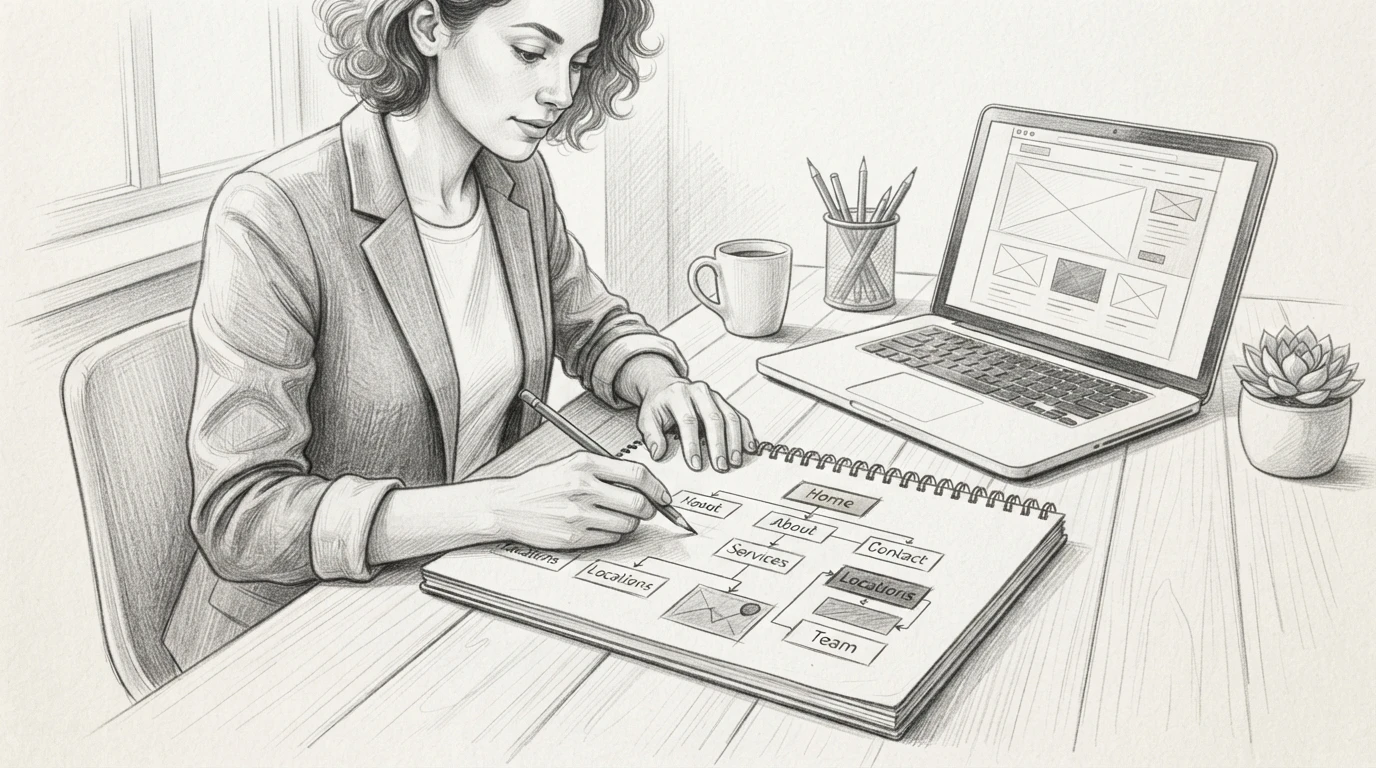
Start with pages, because every page adds design and build time. List each one: home, about, services, contact, and any location or team pages. Then rate the complexity of each. A page with a booking form, map, or payment needs more hours than plain text and photos, so mark those pages as high-effort before you price anything.
Add the pieces that hide inside the quote
Now list the costs that rarely show up on a page count. These are the line items that turn a $4,000 quote into an $18,000 one:
- Copywriting for every page, or rewriting what you have
- Stock photos or a photo shoot
- Forms, booking tools, and payment setups
- Revisions, usually two or three rounds baked into the price
Ask each vendor which of these are included. That one question makes quotes comparable.
Step 3: Compare Pricing Models Without Getting Burned
Fixed price, hourly, and the hybrid middle ground
A fixed price quote locks the number but only if the scope never changes. Hourly billing is fairer for unclear projects, yet costs can drift. A hybrid fixed price plus hourly rate for extras covers both. Most shops that handle custom website design quote fixed, then bill hourly for scope changes.
The five lines your written scope must include
Before anyone signs, the scope should spell out five things:
- Pages and features - exactly what gets built
- Who writes copy and supplies photos
- Revisions - how many rounds are included
- Timeline - launch date and approval steps
- What counts as a change and what it costs
Anything missing is where the extra invoice hides.
Step 4: Budget for What Comes After Launch
The launch invoice is not the last bill. Plan for ongoing costs before you sign anything.
Monthly, annual, and the ones you forget
Small business sites usually cost $20 to $150 per month in hosting, domain, and upkeep, which matches the running costs in Forbes' hosting guide. Add yearly domain renewals, an SSL certificate, backups, and software updates. Some owners also budget for small content edits.
When the original estimate stops being true
That price assumes nothing changes. A redesign, new booking tool, or extra pages each cost more, and maintenance-heavy sites can run much higher, per GoDaddy's 2026 maintenance figures. Ask your builder what a change order costs before you need one.
Now that you know what a fair quote looks like, get one. Harrigan Creative builds custom websites with transparent pricing, so request your free estimate today.
Frequently Asked Questions
Q1: How much should a business website cost to develop?
In 2026, template builds with pro help run $2,000 to $10,000; custom sites cost $10,000 to $50,000.
Q2: What ongoing costs come after launch?
Budget $20 to $150 monthly for hosting, domain, and upkeep.
Q3: Is fixed-price or hourly billing better?
Fixed price suits clear scopes; hourly fits projects still taking shape.
Conclusion
Estimating comes down to breaking a quote into pages, features, and hidden costs. Set your tier first, demand a written scope with revisions and change prices, and budget $20 to $150 monthly after launch.