
HubSpot Review for Growing Businesses: Features, Costs, and Limits
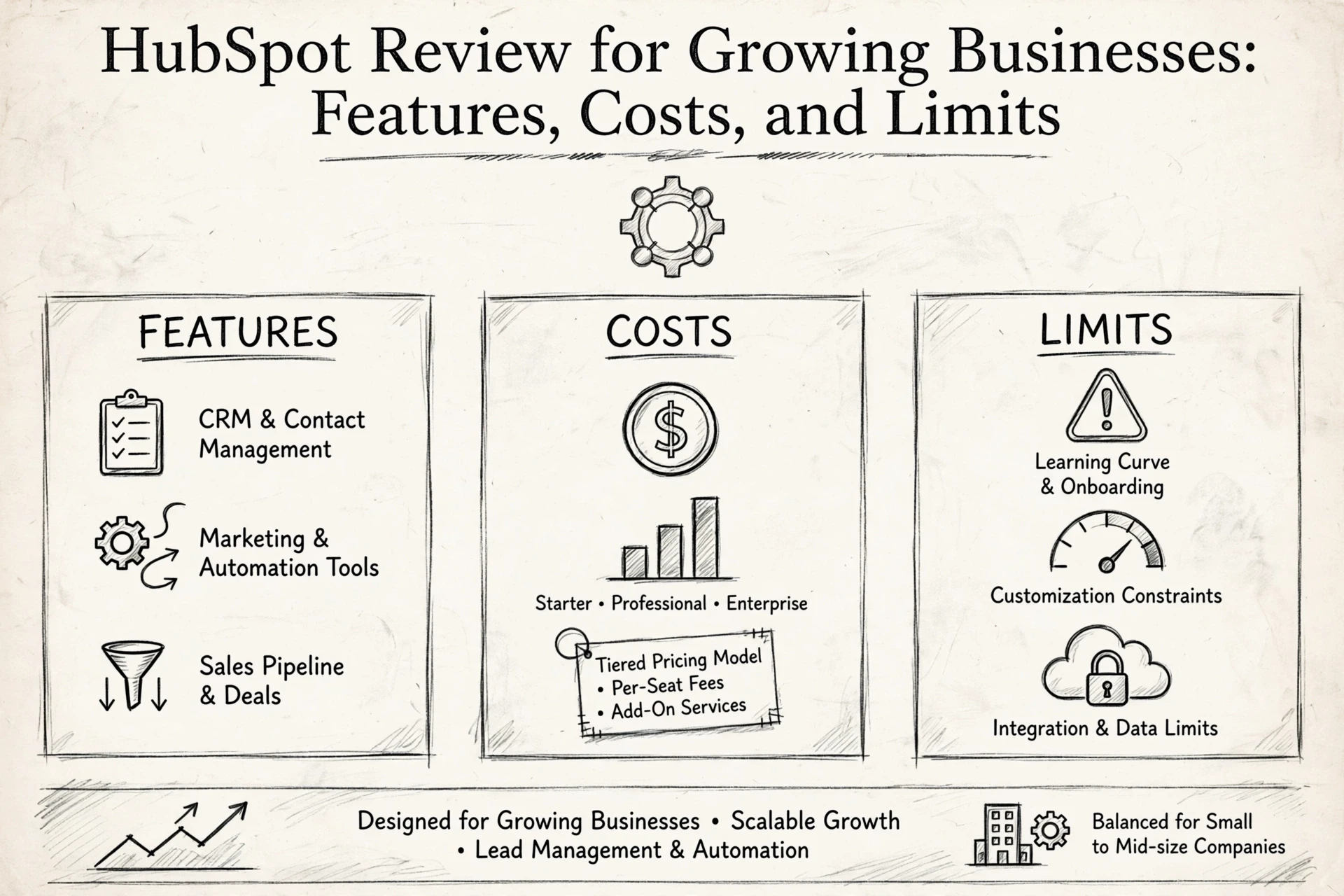
Quick Summary: HubSpot is worth it for growing businesses that need contacts, email follow-up, and sales tracking in one place, since its shared contact timeline stops leads from slipping through the cracks. The catch is cost: each tier roughly doubles in price, seat fees climb as you add sales reps, and contact limits trigger upgrades sooner than most firms expect. The article's advice is to price your plan at your contact count two years out, not today's, and only commit if that number fits your budget. It also points to Harrigan Creative for mapping lead flow to the right plan before you spend.
A local service company can pull in steady enquiries and still lose work when follow-ups sit across separate inboxes and spreadsheets. This HubSpot review for growing businesses looks at whether the platform can pull that workflow into one place, and whether its plan limits hold up as your team expands. We assess features, real costs, and the points where growing firms usually hit a wall, so you can judge fit before you commit to a plan.
How Well Does HubSpot Support a Growing Business?
For most growing businesses, HubSpot's real value is not a long feature list. It is the single record that follows each lead from first visit to closed deal. That shared view is what turns scattered follow-up into a repeatable process, and any honest HubSpot review for growing businesses should judge it on that basis.
Where the Connected Customer Record Helps
Every contact in HubSpot carries one timeline. Form fills, email opens, calls, and notes sit in the same place, so whoever answers the phone knows the history without asking. That matters most for local service businesses, where a missed callback often means a lost job.
The shared record also improves handoffs. A technician can see what the salesperson promised before stepping on site. Fewer dropped details means fewer annoyed customers.
Used well, this connected view feeds smarter decisions too. Pair it with clear tracking of real growth metrics and you can see which channels actually produce revenue, not just contacts.
What Do HubSpot's Costs and Limits Mean as You Grow?
HubSpot is easy to buy and expensive to outgrow. Each tier doubles in price, and seat costs climb as you add sales staff. So judge the price you would pay in year two, not month one.
Check the Full Cost, Not Just the Entry Price
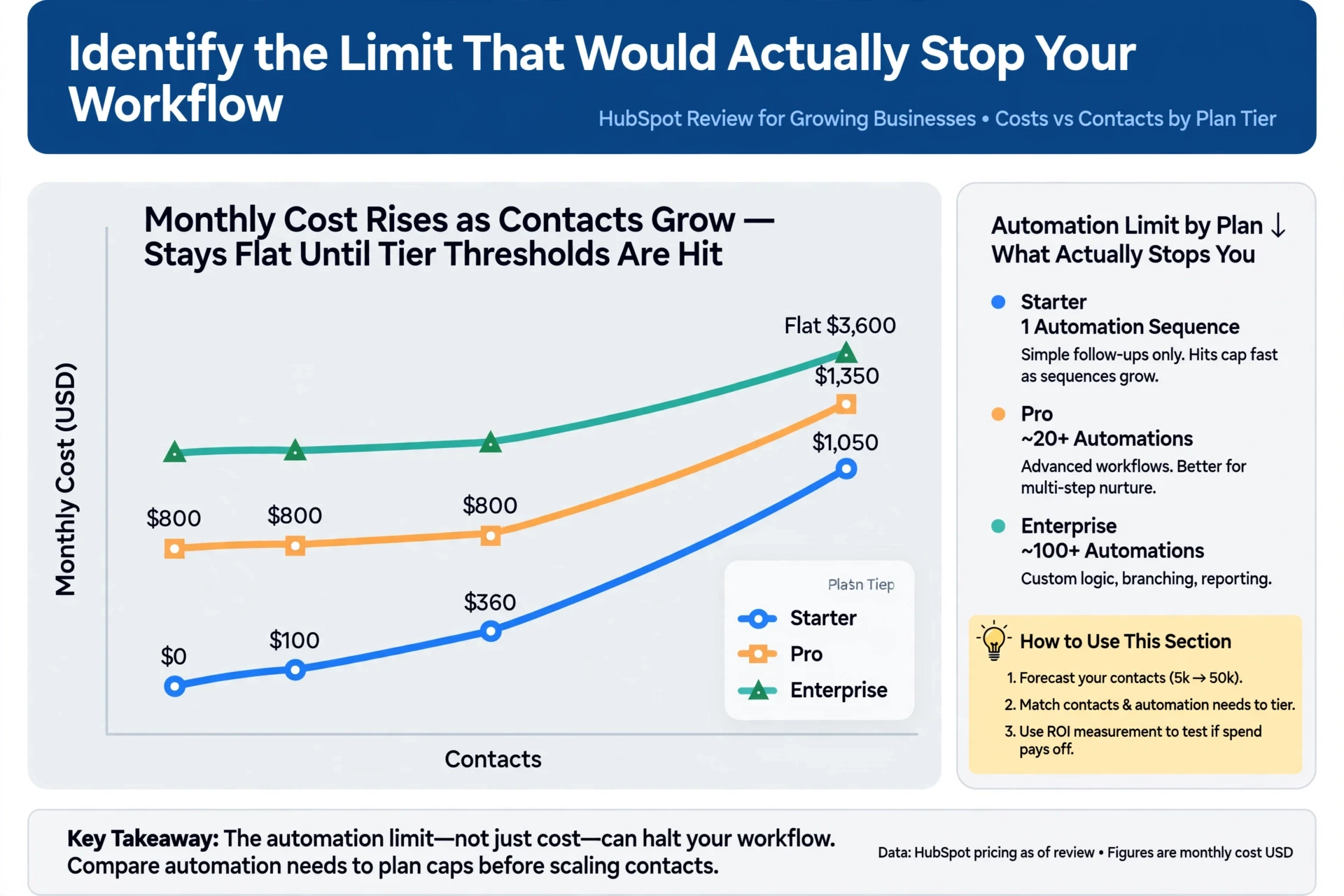
The advertised price usually covers one or two seats plus onboarding fees. Add-ons like extra contacts, premium support, and migration push real costs higher. Map what you will pay at 5,000, 25,000, and 50,000 contacts before you sign anything.
Identify the Limit That Would Actually Stop Your Workflow
Every plan caps specific things: contacts, users, automation, and reporting depth. Find the cap that hits your daily work first. If follow-up sequences matter most, compare automation limits across tiers. Then match that number to your growth forecast, and treat marketing ROI measurement as the test of whether the spend pays off.
Pros and Cons for a Growing Team
HubSpot works best when your team needs sales, service, and marketing in one place. It falters when contact counts and seat fees outpace your growth.
| Pros | Cons |
|---|---|
| Free CRM to start, so you pay only when features demand it | Contact limits trigger tier jumps, often earlier than expected |
| Email follow-up and lead capture are easy to set up | Seat costs climb fast once sales reps need paid tools |
| The dashboard shows pipeline and campaign results in one view | Advanced reporting sits behind Professional plans with annual contracts |
For a five-person shop adding two hires a year, that math holds. Past ten seats, compare totals before you commit. If you need help weighing fit against cost, a marketing ROI review keeps the decision grounded in numbers.
Is HubSpot Worth It for a Growing Business?
For most growing businesses, HubSpot is worth it if you need one system for contacts, email follow-up, and sales tracking instead of three disconnected tools. The free CRM handles basics well, and paid tiers add automation once leads start piling up. It stops being worth it when contact limits or seat fees push your bill past what the revenue justifies.

A simple test: estimate your cost at your contact count two years out, not today's. If that number fits your budget, start small. If it doesn't, plan for a lighter setup now.
For more, see tracking real marketing growth.
If HubSpot looks like a fit but the plan limits worry you, talk to Harrigan Creative. We'll map your lead flow to the right plan before you spend a dollar.
Frequently Asked Questions
Q1: Is HubSpot suitable for a growing business?
Yes, if you use it for lead capture and follow-up. The Starter tier covers early growth well, but rising contact limits and seat costs mean you should map plan limits to your sales volume before committing.
Q2: What does HubSpot really cost as my business grows?
Expect the free and Starter prices to climb. Paid tiers add per-seat fees, and contact limits push upgrades. Budget for annual price jumps, not the teaser rate you sign at.
Q3: Can I run a local service business on HubSpot's free plan?
You can start there. Free covers basic CRM, forms, and email, though branding and automation are limited. Most service businesses outgrow it within months once lead flow picks up.
Q4: Should I manage HubSpot myself or work with an agency?
If you lack time for setup and follow-up workflows, an agency helps. Harrigan Creative builds HubSpot systems that tie leads to local SEO and paid media, so growth channels feed one pipeline.
Conclusion
HubSpot works well for growing businesses, but plan limits and seat costs add up fast. Map your lead workflows to each tier first. If total costs creep past results, our ROI marketing metrics can show what to measure next.