
Inbound vs Outbound Marketing: Which Approach Builds Better Demand?
Quick Summary: Outbound marketing wins on speed, generating leads in days, but demand stops when you stop paying. Inbound takes 3-6 months to build but creates compounding, cost-effective demand from buyers already searching. Most service businesses should start with outbound for quick cash flow, then reinvest in inbound for long-term trust and lower costs. Track cost per lead and match the approach to your timeline and budget.
Need leads next week? Paid ads win. Want a steady stream of buyers who search for you? Inbound does. That's the inbound vs outbound marketing choice in one sentence: speed versus compounding discoverability. This inbound vs outbound marketing comparison covers demand timing, lead intent, durability, and tracking, then gives you a decision rule for when to combine them.
Inbound vs Outbound Marketing: Demand-Building Comparison
| Inbound marketing | Outbound marketing | |
|---|---|---|
| Demand mechanism | Attracts people through content and discoverability | Initiates exposure through ads or direct outreach |
| Time to initial response | Usually builds progressively | Can generate exposure quickly |
| Demand durability | Can persist as useful assets remain discoverable | Often linked to continued campaign activity |
| Best-fit situation | Capturing active interest and building trust | Creating near-term awareness or reaching new audiences |
| Measurement focus | Organic visits, qualified inquiries, and conversion | Reach, response, qualified leads, and acquisition cost |
How Inbound marketing and Outbound marketing Compare
Inbound marketing
Inbound marketing pulls people in. You publish useful content, earn search visibility, and let prospects find you when they already have a problem. It suits service businesses that want to capture active interest and build trust over time.
Key strengths
- Demand builds progressively and can last as long as your content stays discoverable
- Best fit for capturing people who are already searching for help
- Measured through organic visits, qualified inquiries, and conversions
Outbound marketing
Outbound marketing pushes your message out. You run ads or reach out directly to chosen audiences instead of waiting to be found. It works best when you need near-term awareness or want to reach people who don't know you yet.
Key strengths
- Generates exposure and response quickly
- Ideal for launching offers or entering new markets
- Tracked through reach, response, qualified leads, and acquisition cost
Which Approach Creates Demand Faster?
Outbound wins on speed. A paid ad or cold email puts your offer in front of people today, and leads can arrive within days. The catch: demand stops the moment you stop paying.
Inbound takes longer. Ranking for local search terms or building a referral-driven content base often needs three to six months. But once it works, it produces leads around the clock without extra spend.
| Factor | Outbound | Inbound |
|---|---|---|
| Time to first leads | Days to weeks | Months |
| Cost after launch | Keeps rising | Drops over time |
| Durability | Ends with spend | Compounds |
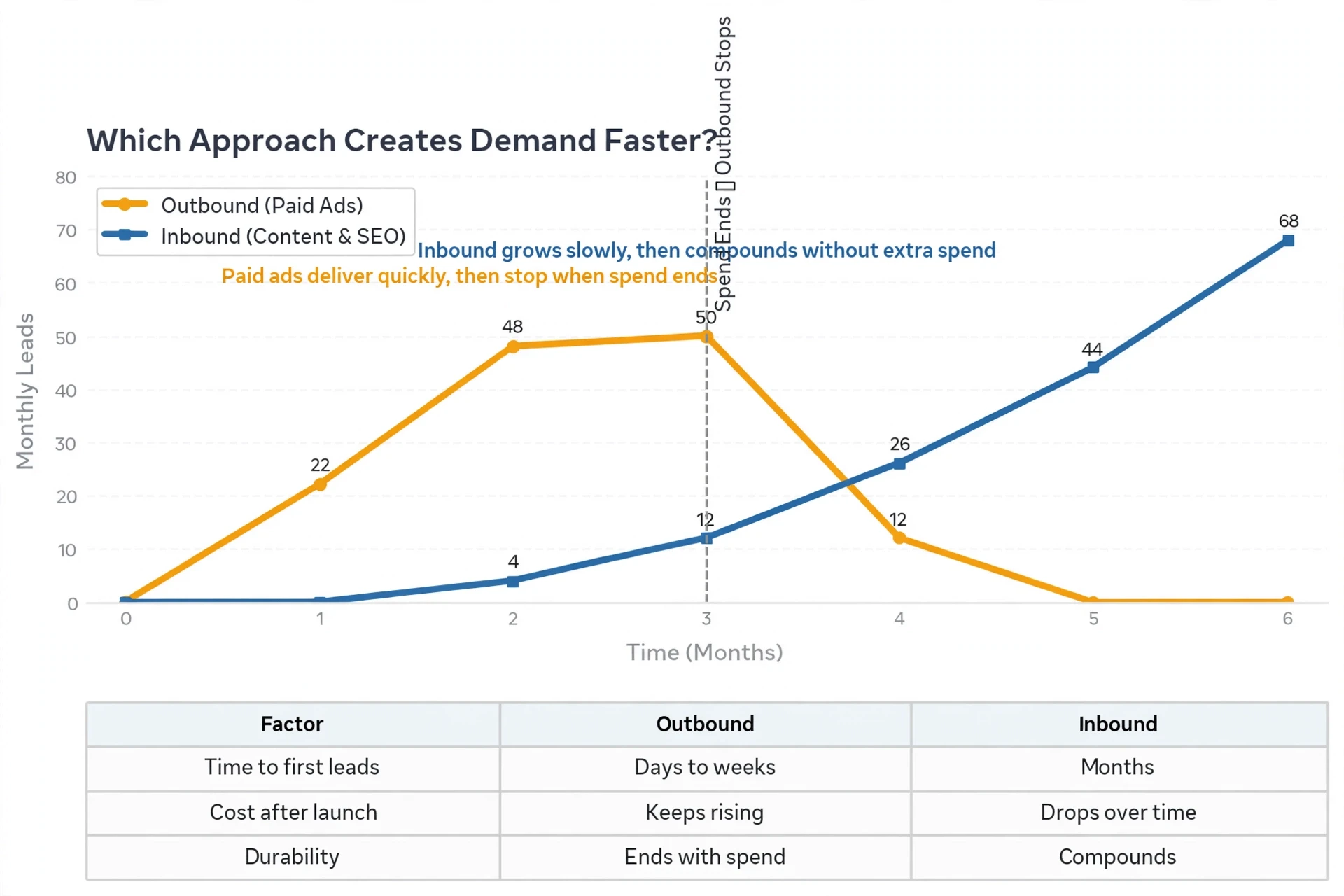
Most service businesses use outbound for quick revenue, then reinvest in inbound. That mix is how we measure real growth from marketing at Harrigan Creative.
Lead Intent, Staying Power, and Measurement
Outbound hands you speed. Ads and cold calls reach people now, but many are just browsing. Inbound leads search for a fix first, so they arrive warmer and convert more often. They also cost less to bring in over time, because a good page keeps ranking long after you publish it.
The catch is patience. Inbound can take three to six months to pay off, while outbound results show up in days.
Measure both, but differently:
- Outbound: cost per lead, reply rate, deals closed.
- Inbound: organic traffic, leads per page, close rate.
Track your numbers monthly. If you want a deeper look at which metrics matter, see our guide to real marketing growth.

Which Should You Choose to Build Better Demand?
Use a simple rule: match the method to your timeline and budget.
| Your Situation | Better Fit | Why |
|---|---|---|
| New business, need leads now | Outbound | Paid ads and cold outreach reach buyers today |
| Local services with steady demand | Inbound | Search intent brings qualified calls monthly |
| Budget under $2,000/month | Outbound first | Inbound SEO takes 6-12 months to pay off |
| Long sales cycle, high-value deals | Both | Outbound opens doors, inbound builds trust |
Most small businesses do best starting outbound for cash flow, then reinvesting in inbound. That mix protects you if one channel slows down.
Track cost per lead for each, not just volume. A cheaper lead that never buys costs more than an expensive one that does.
Not sure how to judge the results? Our guide to marketing ROI metrics breaks down the numbers that matter.
Not sure whether inbound, outbound, or both fit your business? Harrigan Creative builds demand strategies around your goals. Book a free consult today.
Frequently Asked Questions
Q1: Which marketing approach builds better demand?
Inbound usually builds stronger long-term demand because it captures buyers already searching. Outbound wins when you need leads fast. Most service businesses do best using both together.
Q2: How long before inbound marketing shows results?
Expect 3 to 6 months for SEO and content to produce steady leads. Paid ads can fill the gap while your inbound pipeline grows.
Q3: Is outbound marketing still worth the cost?
Yes, for time-sensitive offers, local outreach, or entering a new market. Just track cost per lead closely and stop channels that underperform.
Conclusion
Outbound buys attention fast; inbound builds trust that compounds. Most service businesses need both. The right mix depends on your budget, timeline, and how you measure real marketing growth.