
Web Development Companies vs Freelancers: Which Is Better for Growth?
Quick Summary: Web development companies beat freelancers once your business starts scaling, because freelancers cap out fast on multi-location sites, seasonal campaigns, and ad traffic. The article compares total 12-24 month costs, scalability, accountability, and IP risk, flagging freelancers as a single point of failure who can disappear mid-project and leave you locked out. It recommends matching the model to your growth stage: freelancers work for MVPs and one-off fixes, while growing SMEs benefit from an agency partner that bundles web, local SEO, and paid media with written asset ownership. Harrigan Creative is cited throughout as an example of the agency model, noted for handing over full ownership and tying builds to SEO and lead generation.
The web development companies vs freelancers question comes down to growth. If your site must handle new locations, seasonal campaigns, and ad traffic, a solo freelancer will hit a ceiling fast. We've built for local service and SME owners for years, and here we compare cost, scalability, accountability, and long-term value, then match each model to your business stage so you can choose for the next 12 to 24 months.
Web Development Companies vs Freelancers at a Glance
| Web Development Company | Freelance Web Developer | |
|---|---|---|
| Typical cost | Higher upfront, predictable monthly or project rates | Lower hourly or project rates, less predictable total |
| Best for | Growing SMEs, multi-location businesses, sites tied to SEO and ads | MVPs, landing pages, one-off fixes, very small sites |
| Scalability | Team can add capacity as features and traffic grow | Limited by one person's time and skill set |
| Accountability and risk | Contracts, QA, dedicated PM, built-in continuity | Single point of failure, weaker contracts, IP risk |
| Long-term value | Lower rework, easier to iterate, stronger ROI over 12 to 24 months | Strong for short tasks, weaker for multi-phase roadmaps |
How Web Development Company and Freelance Web Developer Compare
Web Development Company
A team-based shop with structured processes, dedicated project management, and built-in continuity. It suits growing SMEs, multi-location businesses, and sites tied to SEO and paid ads. The model trades higher upfront cost for accountability and room to scale.
Key strengths
- Contracts, QA, and a dedicated PM
- Team scales as features and traffic grow
- Lower rework and stronger ROI over 12 to 24 months
Freelance Web Developer
An independent developer who handles small, clearly scoped work directly with the owner. It fits MVPs, landing pages, one-off fixes, and very small sites. You get lower rates, but capacity stops at one person's time and skill set.
Key strengths
- Lower hourly or project rates
- Fast, direct communication
- Strong fit for short, defined tasks
Total Cost Over the Next 12 to 24 Months
What 'Cheap' Really Costs on a Growth Project
A low upfront quote often hides the real bill. Rebuilds, plugin fixes, and missed deadlines eat into the months when your site should be earning. A freelancer who leaves mid-project can stall launches entirely. Compare total spend, not just the invoice, before you sign anything.
How Retainers Protect Your Ad and SEO Spend
Ongoing support keeps your paid media and local SEO from drifting. When someone owns updates, tracking, and page speed, your ad clicks land on pages that convert. Agencies that give you full asset ownership, as we do at Harrigan Creative, mean you keep every gain even if the contract ends. That continuity is what compounds revenue over 24 months.
Scalability, Accountability, and Risk
Continuity When Your Developer Disappears
A freelancer can vanish mid-project. Illness, a full-time job offer, or burnout leaves you locked out of your own site. Agencies build in redundancy, so another team member can pick up the work. Ask any provider directly: who else knows this codebase? If the answer is one person, that is your risk.
Contracts, IP, and Security You Can Actually Trust
Get ownership terms in writing before you pay a deposit. Some freelancers hand over full rights; others license the site back to you. Agencies like Harrigan Creative typically document asset ownership, maintenance terms, and security responsibilities upfront. Insist on admin access to your hosting, domain, and CMS. If you cannot log in yourself, you do not own the site.

Which Model Fits Your Growth Stage
Signals You Have Outgrown a Solo Developer
Watch for a booking system that breaks every quarter, a site that cannot rank locally, and updates that wait weeks. If your website no longer supports new services, staff pages, or paid campaigns, one contractor has hit their limit.

What a Growth-Ready Web Partner Looks Like
A growth-ready partner builds fast, mobile-friendly sites and connects them to local SEO and paid media so traffic turns into leads. They hand you full ownership of your assets and adjust strategy as your revenue goals change.
Choose a web development company when you need strategy, local SEO, and paid media working together under one roof. Choose a freelancer for small, well-scoped builds on a tight budget. Growing businesses that want full asset ownership and ongoing support usually get more from an agency partner like custom web design teams provide.
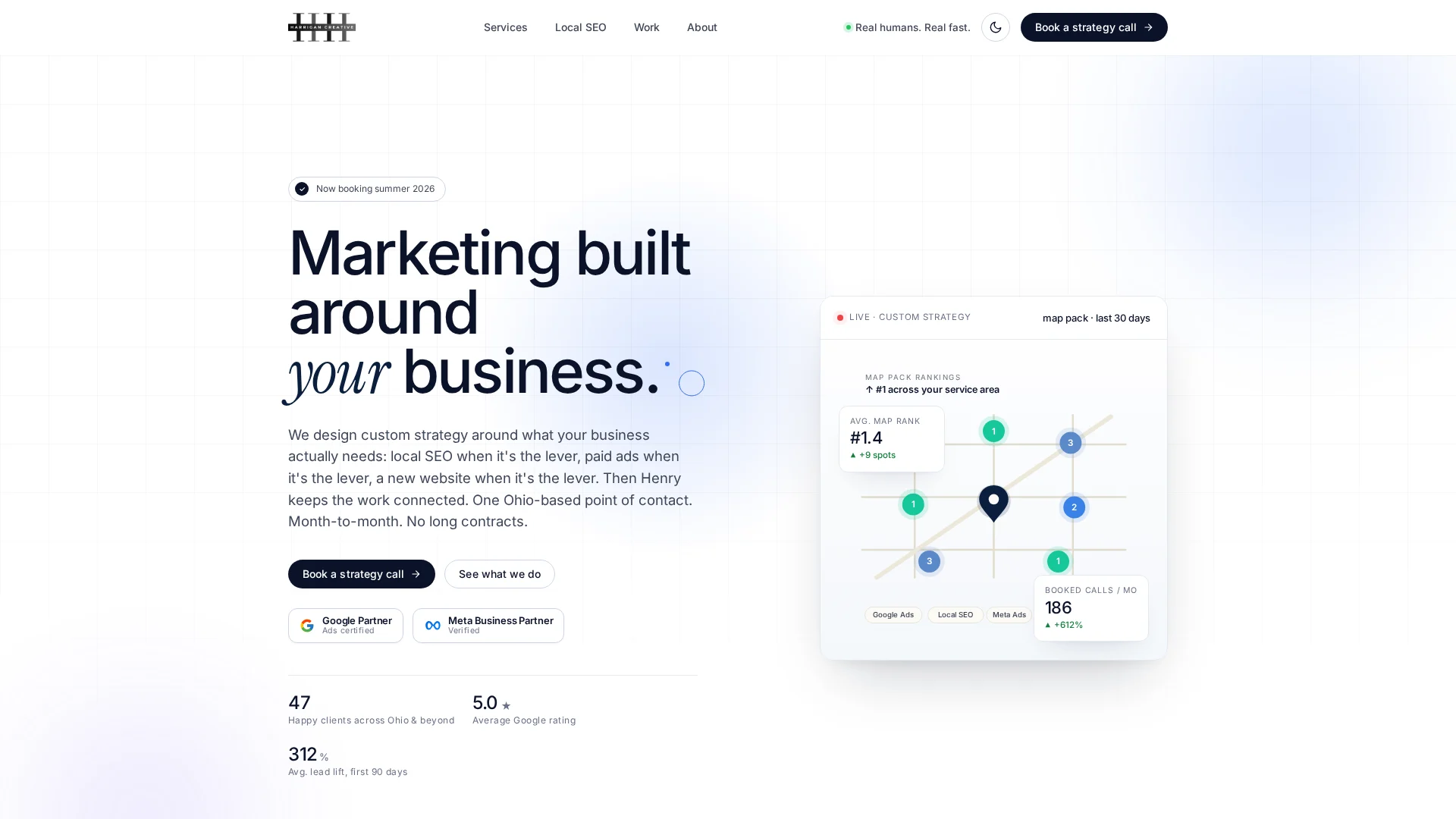
Still weighing the two paths? Talk with Harrigan Creative about a site built for growth, local SEO, and leads. Book a free consultation today.
Frequently Asked Questions
Q1: Should growing businesses hire developers or freelancers?
If you expect steady growth, an agency offers strategy, local SEO, and paid media support under one roof. Freelancers suit tight budgets and small, one-off builds.
Q2: How much should a small business website cost?
Most small business sites run $2,000 to $10,000. Complex features like booking systems or e-commerce push costs higher, so get itemized quotes before committing.
Q3: Who owns my website and its assets?
Ask before signing. Agencies like Harrigan Creative hand over full ownership of your domain, files, and accounts. Some freelancers keep hosting and code, which limits your control later.
Conclusion
Freelancers suit tight budgets and simple sites. Agencies fit growth plans needing local SEO, paid media and ongoing support. Match the choice to your stage and goals.