
Web Development Trends in 2026 Focus on Speed, Security, and AI
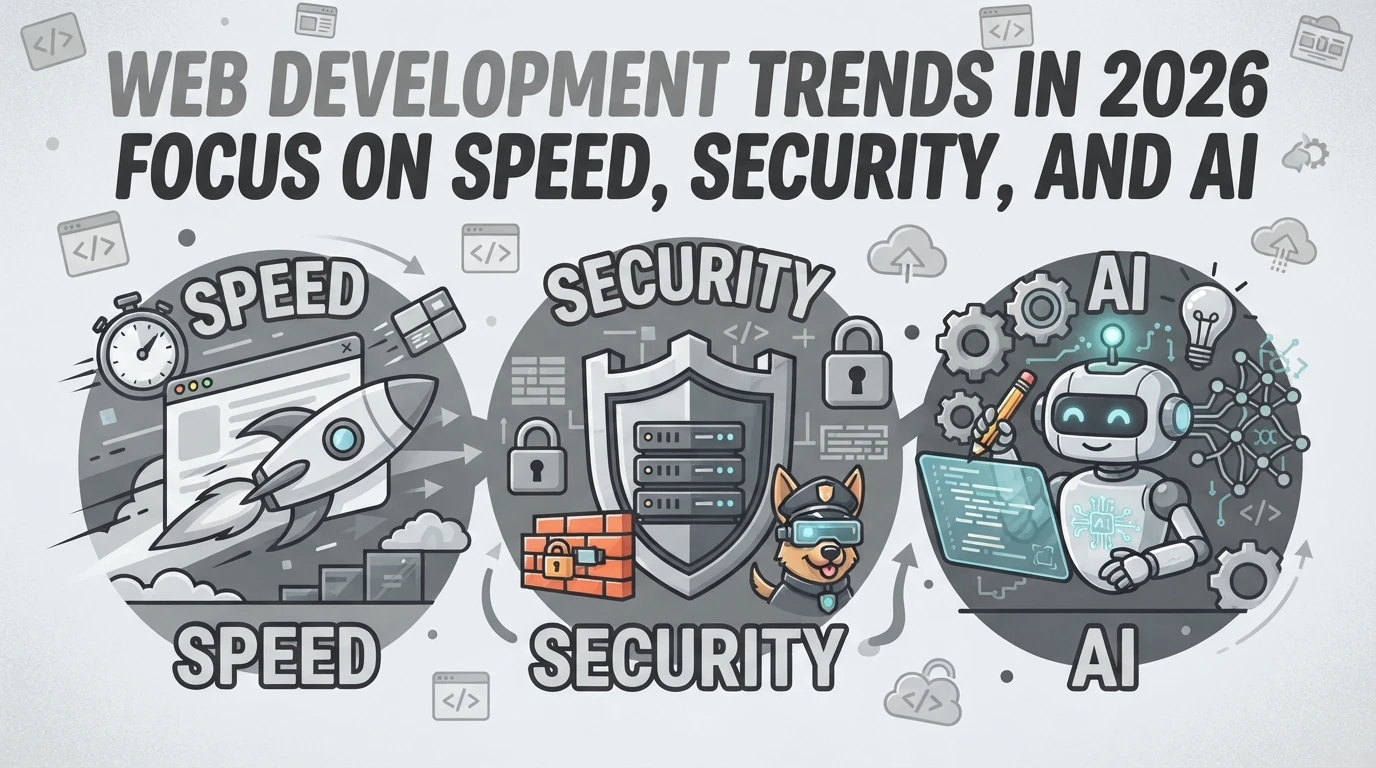
Quick Summary: Web development in 2026 is defined by three non-negotiable pressures: clearing Google's Core Web Vitals (LCP under 2.5s, INP under 200ms), adopting zero-trust security to block automated bot attacks, and adding structured data so AI search agents can read your pages. With only about 48% of mobile sites passing all three Core Web Vitals and 51% of small businesses lacking any cybersecurity measures, there is a real opening for businesses that act now. The article argues trend lists chasing visual fads miss the point, since slow, open, or invisible sites lose rankings, leads, and revenue. It frames each shift as a concrete refresh decision and pitches Harrigan Creative's custom builds and local SEO services as the way to close these gaps.
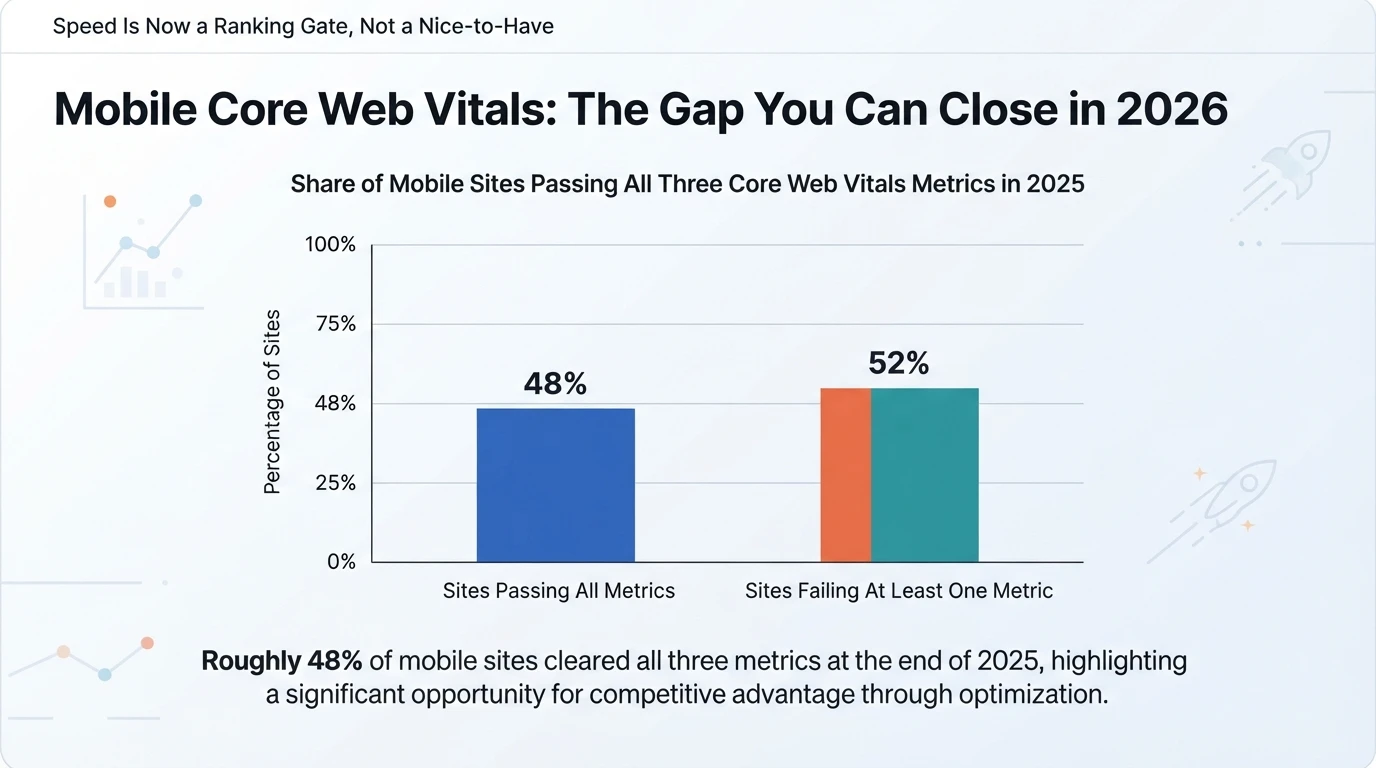
Web development trends 2026 come down to three pressures: Google's 200ms INP speed threshold, zero-trust security against AI-driven attacks, and sites built so AI search agents can read them. Yet only about 48% of mobile sites cleared all three Core Web Vitals at the end of 2025. Trend lists push visual fads that won't move a ranking or stop a credential-stuffing attempt. The real risk for a small business is shipping a site that is slow, open, or invisible. We focus on custom builds and local SEO, so this piece maps each shift to a concrete refresh decision.
Speed Is Now a Ranking Gate, Not a Nice-to-Have
Among web development trends 2026, speed carries the most immediate cost. Google measures Core Web Vitals with real user data, and slow pages lose rank, calls, and form fills before anything else matters. Roughly 48% of mobile sites cleared all three metrics at the end of 2025, so most competitors still have a gap you can close.
What "Fast Enough" Means in 2026
Google scores three metrics per page: LCP (main content loads in under 2.5 seconds), INP (responses to taps under 200ms), and CLS (little layout jumping). A page passes only when 75% of visits hit all three targets. INP is the hardest one, because it fails whenever scripts block the main thread.
How SMBs Should Budget for It
Treat speed as a line item, not a one-time fix. A practical split:
- Build phase: image compression, fast hosting, and lean code, quoted upfront
- Quarterly checks: run PageSpeed Insights and Search Console's Core Web Vitals report to catch drift
- Post-launch: budget for plugin updates and script audits, the usual INP killers
Vendors promising speed without stating a baseline usually deliver none. Build practices that prevent this are covered in our guide to performance-focused web development features.
Security Defaults Have Shifted to Zero Trust
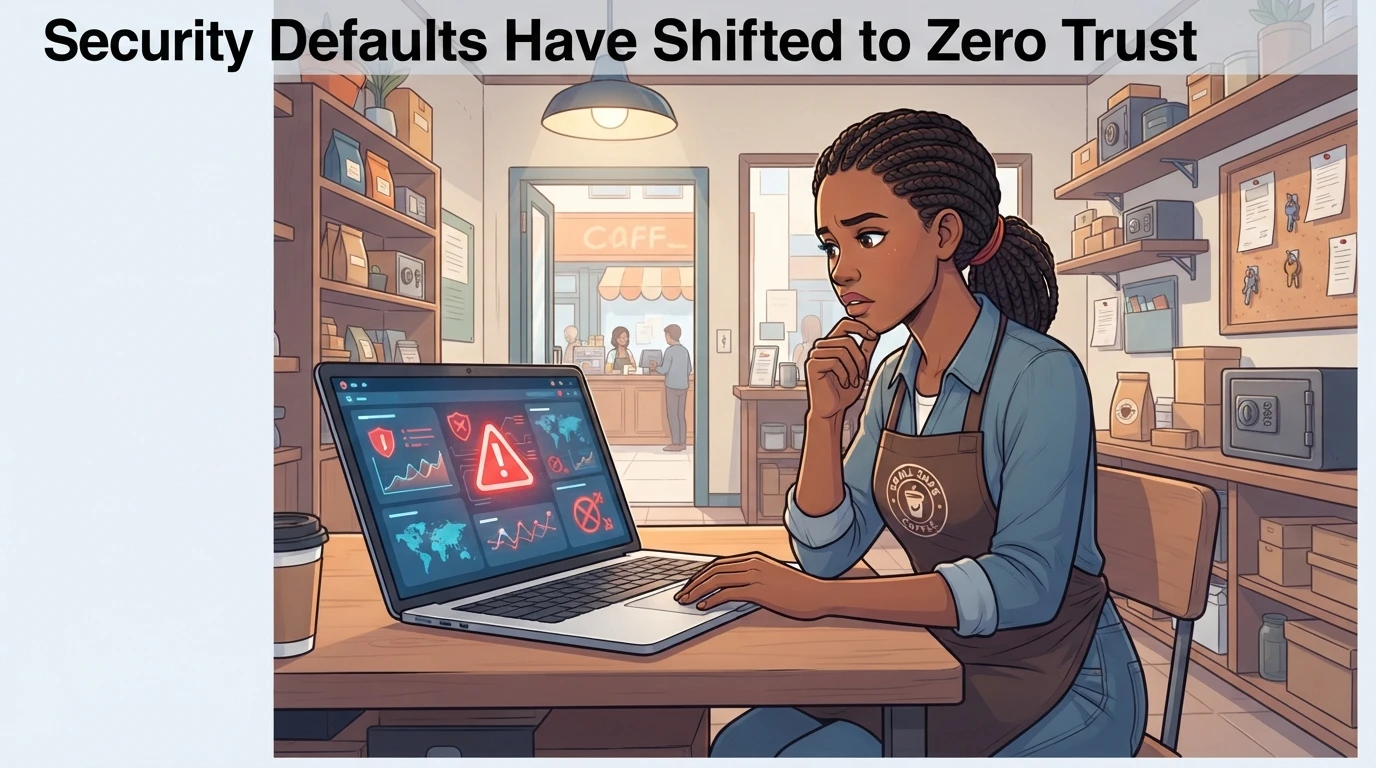
Zero trust means every request to your site must prove it is safe. Nothing gets a free pass because it came from a familiar place. That shift is one of the defining web development trends 2026 has brought to small sites, because attackers no longer probe by hand. Bots and AI tools test thousands of small business sites daily, and 51% of small businesses still have no cybersecurity measures in place, according to a 2026 industry review. Assume your site will be scanned this week.
The 2026 Threat Picture for Small Sites
Small sites face automated credential stuffing, plugin exploits, and fake form submissions that poison your leads. AI makes these attacks cheaper, so volume is rising even if your site never makes the news. The World Economic Forum's 2026 outlook ties the widening risk gap directly to AI adoption.
Zero-Trust Controls to Require in Your Build Contract
Put these in writing before you sign:
| Control | What It Does |
|---|---|
| Web Application Firewall | Blocks bot and exploit traffic at the edge |
| Multi-factor admin logins | Stops stolen-password access |
| Least-privilege access | Each user gets only what they need |
| Automatic updates and backups | Shrinks the window plugins stay exposed |
When comparing partners, ask which of these are standard in their build practices rather than paid extras.
AI Is Now Both the Builder and the Reader of Your Site
The same technology shapes both ends of your website: AI tools now help build it, and AI assistants now read it. Treat both as design requirements, not experiments.
AI in the Build: Agentic Workflows Become Default
Agentic coding tools, where an AI writes, tests, and revises code on its own, are becoming a normal part of a 2026 developer's setup. They speed up routine work like boilerplate, tests, and refactors. The catch: someone still has to check the output. A skilled team pairs these tools with real review, so you get speed without fragile code.
AI as a Reader: Make Your Site Machine-Legible
More customers now meet your business through AI answers, not just search results. AI assistants need to parse your pages cleanly, which means structured data that labels your content in a machine-readable form, along with plain headings and clear service pages. Sites missing this get skipped or misquoted. We cover what this shift means for local visibility in more depth in our guide to AI search and local businesses.
How We Got Here: From 2024 Hype to 2026 Defaults
In 2024, these ideas were predictions. INP had just replaced FID as a Core Web Vital, and zero-trust security sounded like enterprise talk. By 2026, they became baseline expectations. Google enforces 200-millisecond responses, bots attack daily, and AI search agents judge whether they can read your pages. Fast, secure, AI-ready is now the default, not a differentiator.
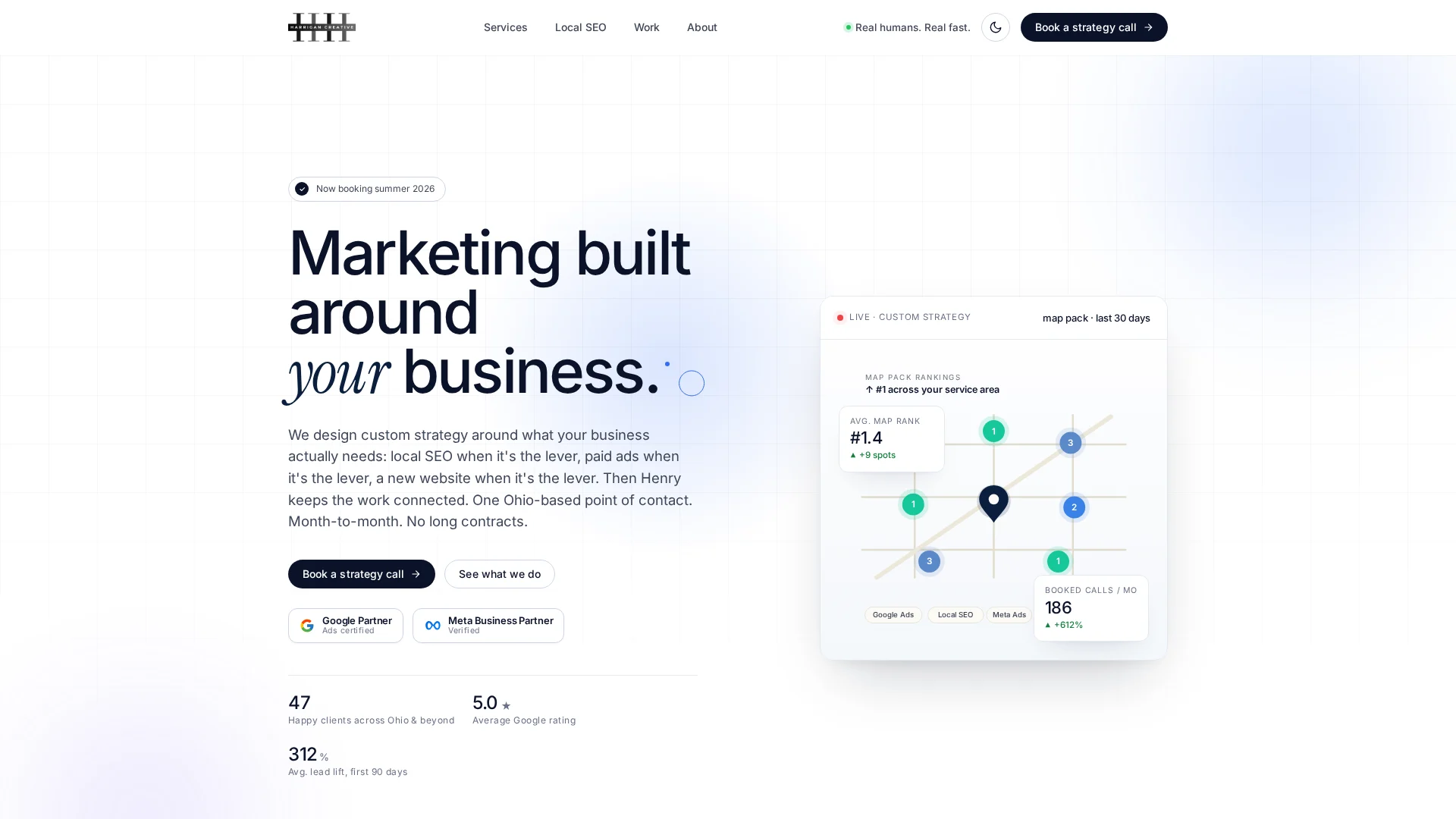
If your site lags past Google's 200ms bar or AI agents can't read it, let's fix that. Talk with Harrigan Creative about a faster, safer, AI-ready site.
Frequently Asked Questions
Q1: Which web development trends matter most in 2026?
Three: hitting Google's 200ms INP speed bar, zero-trust security against automated attacks, and structured data so AI agents can read your site.
Q2: How do I check if my site is fast enough?
Run PageSpeed Insights and Search Console's Core Web Vitals report. Aim for LCP under 2.5 seconds and INP under 200ms.
Q3: What security should my 2026 build contract include?
Require a web application firewall, multi-factor admin logins, least-privilege access, and automatic updates and backups in writing.
Conclusion
Three pressures define 2026: speed past Google's 200ms bar, zero-trust security against bot attacks, and structured data AI agents can read. Fast, safe, and AI-ready is now the baseline. Audit your site against all three, and fold the checks into your next refresh, as outlined in our web development build practices.